
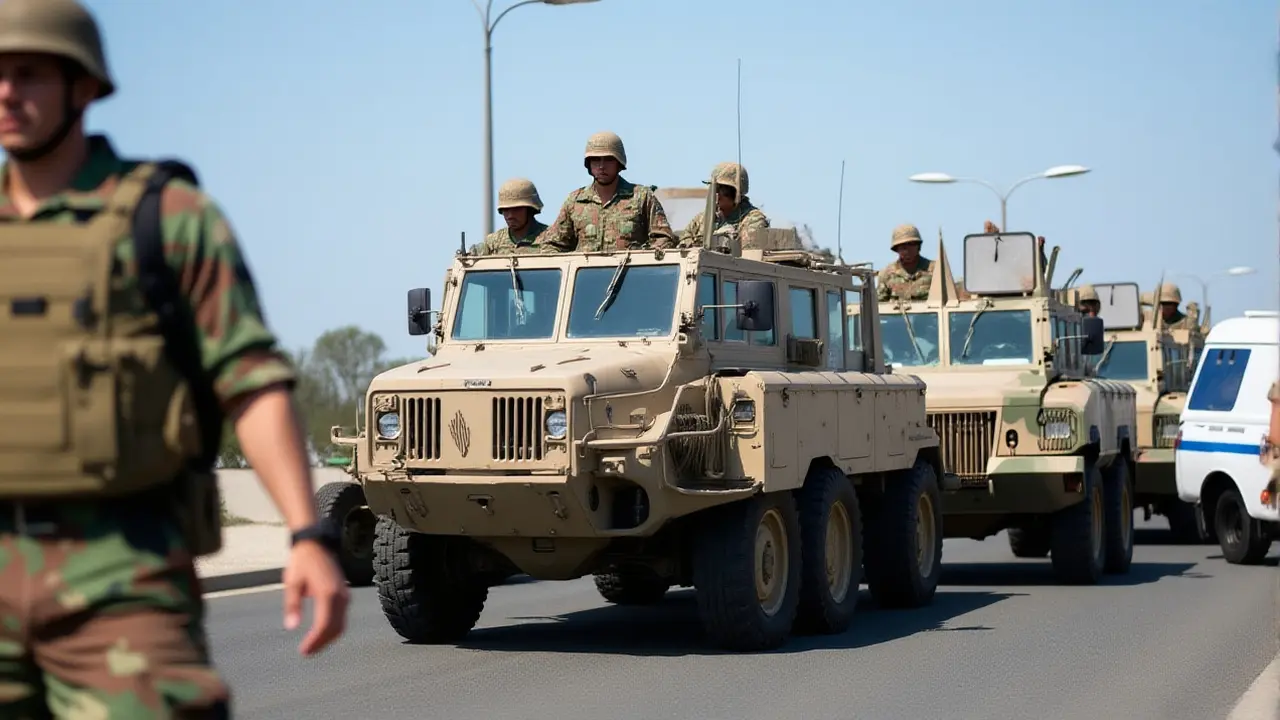
It’s rare to find a job where you stick around for two decades without looking back. But for the healthcare workers of the South African Military Health Service, that loyalty isn’t just a career choice—it’s a commitment to national security. On 22 May 2026, Maphaha, the Surgeon General of the South African National Defence Force, stood at the helm of a solemn yet celebratory medal parade. The occasion? Recognizing those who have given twenty years of their lives to military medicine.
The ceremony took place at the Wynberg Military Sports Ground in Cape Town. It wasn’t just a handshake and a photo op. This was a formal recognition of endurance, skill, and dedication under pressure. The recipients were awarded the 20-year loyal service medals—a decoration that signifies more than time served. It marks survival, adaptation, and unwavering duty in one of the most demanding environments imaginable.
A Tradition of Recognition
This wasn’t an isolated event. If you look back just six months earlier, on 14 November 2025, a similar parade unfolded in Bloemfontein. At the Tempe Sports Grounds, the SANDF Surgeon General led another ceremony honoring personnel with the same 20-Year Long Service Medal. The pattern is clear: the defence force doesn’t take long-term service for granted. They institutionalize gratitude.
But why does this matter now? Because military healthcare isn’t static. These medics, nurses, and doctors have navigated budget cuts, global pandemics, and evolving conflict zones over the last two decades. Their presence ensures that when soldiers deploy, they aren’t deploying blindfolded. They know there’s a medical backbone supporting them. And that backbone is made of people like these medalists.
The Weight of Twenty Years
Let’s put it in perspective. Twenty years is roughly 7,300 days. That’s 175,200 hours. For many of these service members, that includes weekends worked, holidays missed, and deployments far from home. Some may have treated casualties in peacekeeping missions across Africa. Others might have managed outbreaks or provided emergency care during domestic crises.
Maphaha didn’t just preside; he personally oversaw the proceedings. His role as Surgeon General places him at the top of the military health hierarchy. By standing center stage, he signaled something important: leadership sees you. Leadership values you. In an era where morale can be fragile, these ceremonies act as anchors—reminding personnel that their sacrifice has weight, visibility, and consequence.
Why Loyalty Medals Matter Beyond the Ribbon
You might think a medal is just metal on a ribbon. But in military culture, it’s currency. It’s proof. When a soldier wears that 20-year pin, they’re wearing a story. A story of resilience. Of showing up when others wouldn’t. Of staying when leaving would’ve been easier.
And here’s the twist: these awards don’t just benefit the recipient. They reinforce organizational culture. New recruits see what longevity looks like. Mid-career officers get a roadmap. Commanders gain insight into retention strategies that actually work. It’s not about nostalgia—it’s about sustainability.
Looking Ahead: What Comes Next?
No specific future dates have been announced for the next round of long-service parades. But given the cadence of the 2025 Bloemfontein event and the 2026 Cape Town ceremony, expect more. The SANDF seems committed to maintaining this rhythm. Whether quarterly, biannual, or annual, these events will likely continue as part of broader efforts to retain skilled medical personnel.
What’s unclear is how these ceremonies will evolve. Will they expand to include shorter service milestones? Will digital badges accompany physical medals? Only time will tell. But one thing remains certain: the value of experience won’t diminish. In fact, it’ll become even more critical as healthcare demands grow more complex.
Historical Context: How We Got Here
The tradition of awarding long-service medals dates back centuries in militaries worldwide. But in South Africa, post-apartheid restructuring reshaped how these honors are distributed. The creation of the unified SANDF meant integrating former forces—and their traditions—into a single framework. The South African Military Health Service emerged from this process, tasked with delivering integrated medical support across all branches.
Over the past 20+ years, SAMHS has grown significantly. From field hospitals to advanced surgical units, its capabilities have expanded alongside technological advancements. Yet through all that change, the human element remained constant. People still bleed. People still heal. And people still need someone there to help them do both.
Frequently Asked Questions
Who received the 20-year loyal service medals?
Members of the South African Military Health Service (SAMHS) who completed exactly 20 years of continuous or qualifying service. These include doctors, nurses, paramedics, and administrative staff within the military health system.
Where did the 2026 medal parade take place?
The ceremony occurred at the Wynberg Military Sports Ground in Cape Town on 22 May 2026. A previous event was held at Tempe Sports Grounds in Bloemfontein on 14 November 2025.
What is the significance of the 20-year loyal service medal?
It recognizes two decades of dedicated service, symbolizing loyalty, resilience, and contribution to national defense through healthcare. It also reinforces institutional memory and encourages retention among mid-to-senior level personnel.
Who presided over the 2026 ceremony?
Maphaha, serving as the Surgeon General of the South African National Defence Force, officiated the parade. As head of military health services, his presence underscored the importance placed on veteran healthcare providers.
Are there plans for future long-service medal parades?
While no official schedule has been released, the recurrence of such events suggests they will continue. Future parades may adopt new formats but are expected to maintain focus on recognizing sustained commitment within the SANDF.


Mike Gill
May 28, 2026 AT 09:41its really touching to see people get recognized for such long service. twenty years is a huge chunk of life and they deserve every bit of respect. i hope the medals mean something real to them and not just paper work.
Suresh Kumar
May 30, 2026 AT 08:31The ritual of recognition serves as a temporal anchor in the fluidity of military existence. It is not merely about the metal, but the validation of endurance against the entropy of time itself.
Jay Patel
June 1, 2026 AT 03:47Oh please 🙄 another parade? The masses love their shiny objects and pageantry. It’s all theater for the uninitiated. Real merit doesn’t need a ceremony in Cape Town to validate it. But sure, let’s clap for the status quo 👏🎭
Pranav Gopal
June 2, 2026 AT 01:09We should look at this as a collective achievement rather than individual glory. The system supports these individuals, and they support the system. It is a symbiotic relationship that strengthens our national fabric when we acknowledge it properly.
कमल कमल
June 2, 2026 AT 10:53While South Africa plays with its little ribbons, one must consider the broader geopolitical implications of military healthcare retention strategies in the global south. The passive acceptance of such ceremonies by the international community suggests a lack of critical engagement with the actual efficacy of these programs, which often serve more as morale-boosting exercises than substantive policy shifts, thereby perpetuating a cycle of performative patriotism that ultimately distracts from the pressing need for structural reform within defense medical infrastructures across developing nations, where the true test of loyalty is not measured in medals but in the ability to sustain operational readiness amidst resource constraints and political instability, a reality that many Western observers conveniently ignore while focusing on the superficial aspects of ceremonial recognition.
harsh gupta
June 4, 2026 AT 06:55Don't fall for the propaganda. These medals are just distractions from the crumbling infrastructure. They want you to feel good so you don't ask why the hospitals are underfunded. Typical elite manipulation tactic. Stay woke.
Mukesh Katira
June 6, 2026 AT 04:15It is morally imperative that we honor those who have dedicated their lives to service. The casual observer might dismiss this as mere bureaucracy, but the philosophical weight of two decades of sacrifice cannot be understated. We must respect the formalities.
Roop Kaur
June 7, 2026 AT 06:24Think about the deep state implications here. Why now? Why Cape Town? It's clearly a signal to the opposition. The jargon they use in the press release is designed to confuse the average citizen while hiding the real agenda. Wake up people!
Ankita Bajaj
June 8, 2026 AT 19:50This is such a positive step! It shows that hard work pays off and that institutions value their people. Let's keep supporting our veterans and encourage more people to join these noble services. Go team! ✨
Manish gupta
June 9, 2026 AT 03:58Sure, give them a medal. Does it pay the bills? No. Does it fix the broken system? No. It's just drama for the news cycle. Typical elitist nonsense pretending to care while doing nothing substantial.
Sanjay Kumar
June 10, 2026 AT 09:01I think we can learn a lot from this. Loyalty is rare these days. Seeing someone stick with a job for twenty years reminds us of the value of commitment. It's inspiring to watch.
Gaurav Jangid
June 11, 2026 AT 13:21Wow!!! Just wow!! I am so moved by this display of dedication!! The colors of the uniforms, the shine of the medals, the pride in their eyes!! It makes my heart swell with emotion!! We need more of this energy in the world!! ❤️🎖️✨
Ghanshyam Gohel
June 12, 2026 AT 00:45As an observer, I find the proceedings quite orderly. However, one must question if the aggression in maintaining such rigid hierarchies is necessary. Formal recognition is fine, but let us not forget the human element behind the uniform.
Nathan Lemon
June 12, 2026 AT 01:50From a cultural perspective, this event highlights the importance of tradition in military structures. The integration of diverse backgrounds into a unified health service is a testament to the evolving nature of national identity in South Africa.
Abhijit Pawar
June 12, 2026 AT 18:59Respect the service. Keep your opinions to yourself if you don't understand the discipline required. It's simple: they served, they got honored. End of story.
lavanya tolati
June 13, 2026 AT 12:20it is beautiful to see recognition given to healthcare workers. their service is vital and often overlooked. thank you to all who participated in the ceremony
srinivasan sridharan
June 13, 2026 AT 18:09How optimistic of them to assume medals solve retention issues. Truly a formal approach to a complex problem. One wonders if the sarcasm in the public response reflects deeper dissatisfaction.